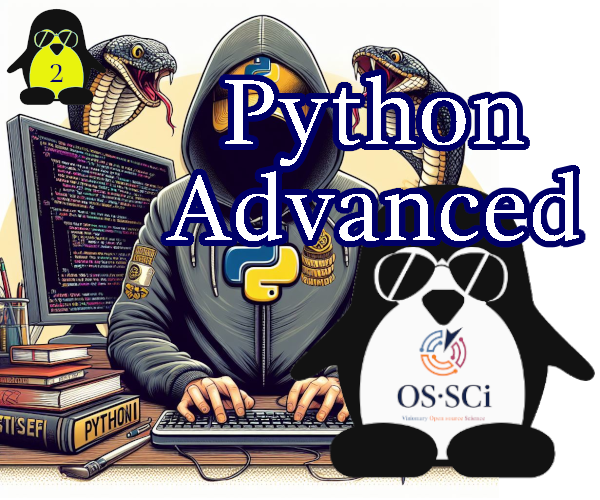
The Python II – Advanced course is an advanced specialization focused on modular programming, object-oriented design, functional programming, advanced exception handling, and practical application development using Python. Aligned with the Python Institute PCAP-31-03 certification objectives, the course equips learners with the skills required to design scalable, maintainable, and efficient Python applications for modern software development environments.
The curriculum expands upon foundational Python concepts by introducing advanced modules and packages, custom exception handling, string processing, object-oriented programming methodologies, functional programming techniques, and file handling operations. Through practical laboratories and integrated application projects, students gain hands-on experience building modular applications, implementing reusable software components, managing input/output operations, and applying advanced programming practices.
The course also emphasizes software design principles, clean code practices, reusable architectures, and real-world application development workflows aligned with modern Python programming standards.
By the end of this course, learners will be able to:
Understand and Explain
- Python modules, packages, namespaces, and code organization principles
- Exception handling mechanisms, custom exceptions, and robust error management strategies
- Advanced string processing, character manipulation, and text-handling operations
- Object-oriented programming concepts including classes, objects, inheritance, encapsulation, and polymorphism
- Functional programming concepts including list comprehensions, lambda expressions, closures, and higher-order functions
- File handling, input/output operations, and application data management workflows
Configure and Implement
- Modular Python applications using built-in and user-defined packages
- Programs utilizing libraries such as
math,random,platform, and custom modules - Custom exception handling systems for reliable and maintainable applications
- Object-oriented application architectures using classes, methods, inheritance, and reusable components
- Functional programming solutions for efficient data processing and automation tasks
- File reading, writing, and data processing workflows using Python I/O operations
Analyze and Troubleshoot
- Module import issues, package dependencies, and namespace conflicts
- Runtime errors, exception propagation, and debugging scenarios in Python applications
- String manipulation problems, file handling errors, and data processing inconsistencies
- Object-oriented design issues including inheritance behavior and method execution flows
- Functional programming logic, closures, and performance-related concerns
- Application reliability and maintainability using Python debugging and testing practices
Design and Develop
- Scalable and modular Python applications using advanced programming practices
- Reusable object-oriented systems and maintainable software architectures
- Data-driven and automation-focused applications using functional programming techniques
- File-based and interactive applications integrating multiple Python concepts
- Practical end-to-end applications demonstrating the integration of advanced Python programming topics